
SEISMIC DAMPING SYSTEMS FOR CANADIAN BUILDINGS
Canadian firms with Tectonus design experience


Canadian Case Studies
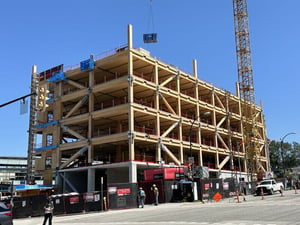
THE HIVE
10-storey all-timber structure
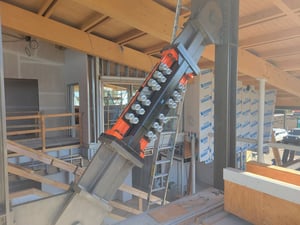
Designed by Fast + Epp and DIALOG, The Hive incorporates Tectonus RSFJ dampers in both perimeter timber braced frames and CLT shear walls. The self-centring seismic system supports low-damage seismic performance and helped enable one of North America's tallest and most advanced mass timber seismic-force-resisting structures.
TSAWWASSEN ELDERS CENTRE
Hybrid structure with recentering steel braces
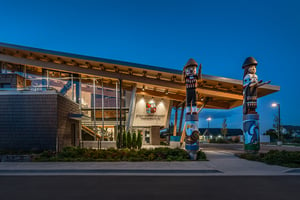
RJC Engineers and Iredale Architecture incorporated Tectonus RSFJ dampers into the seismic system for this post-disaster community facility. The self-centring solution reduced seismic force demand while helping address a complex structural irregularity and supporting the building's post-disaster performance objectives.
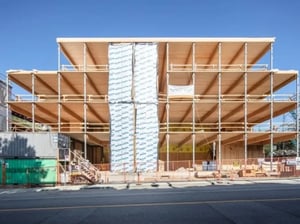
FAST + EPP HEAD OFFICE
Rocking CLT walls with Tectonus hold downs
Fast + Epp and f2a architecture incorporated Tectonus RSFJ dampers into the CLT shear walls of their mass timber headquarters. The self-centring seismic system was designed to support immediate post-earthquake occupancy while showcasing an innovative low-damage approach to resilient timber design.
Seismic Systems for Different Design Objectives
Different projects have different seismic performance objectives. Some prioritise reducing seismic demand and structural weight, while others focus on minimising damage, improving resilience, or simplifying retrofit construction. Tectonus has a range of seismic damping solutions that can be matched to the performance goals of a project.
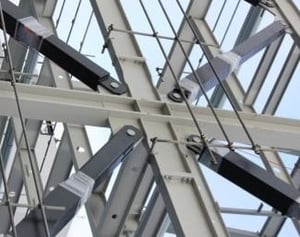
TECTONUS DMAX
BRB/EBF alternative with low overstrength
A friction-damped structural brace that provides high energy dissipation with low overstrength demand.
Often used for:
- Steel braced frame buildings
- BRB / EBF replacement
- Commercial buildings
- Seismic retrofits
Why engineers consider DMAX:
- High hysteretic damping
- Reduced force demand on supporting elements
- Lower overstrength compared with conventional yielding systems
- Familiar design approach for engineers experienced with braced frames
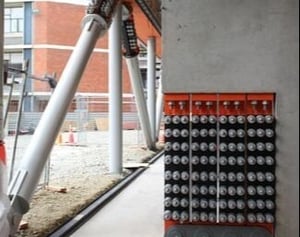
TECTONUS RSFJ
Self-centering seismic braces hold downs
A friction-based connection that combines energy dissipation with self-centring behaviour.
Often used for:
- Critical (post-disaster) infrastructure
- Mass timber structures
- Low-damage seismic design
- Rocking structural systems
Why engineers consider RSFJ:
- Reduces residual drift after earthquakes
- Enables self-centring structural behaviour
- Provides repeatable energy dissipation
- Supports resilient building design without structural yielding
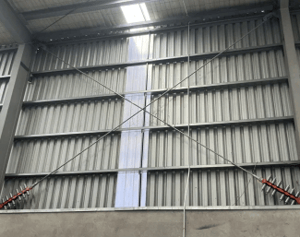
TECTONUS XBRACE
Tension-only braces with 3x more ductility
A damped tension-only bracing system designed for efficient seismic strengthening and new construction.
Often used for:
- Industrial buildings
- Warehouses
- Low-rise steel structures
- Retrofit projects
Why engineers consider XBRACE:
- Lightweight and simple to install
- Improves seismic energy dissipation
- Can reduce seismic demand on foundations
- Supports efficient steel bracing layouts
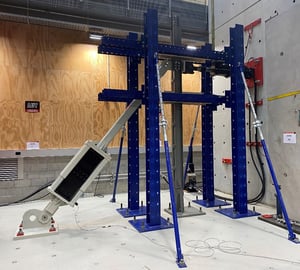
Over the last decade, engineering specifiers have insisted on extensive system and component testing, including:
- Large scale shake table testing
- HCAI (formerly OSHPD) testing for use in California hopsitals
- Full scale system testing as per AISC 341 and ISO 13033 loading protocol
- Component testing as per ASCE 7-16 and EN15129
- Durability testing
How can we help?
Get in touch to ask a question or schedule a free consultation