

STRUCTURAL SYSTEMS DESIGNED FOR NEW ZEALAND BUILDINGS
NZ firms with Tectonus design experience



New Zealand Project Examples
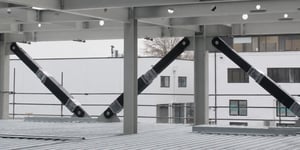
FORTE HEALTH HOSPITAL
IL4 hospital with reduced foundation demand
The preliminary EBF design met the project’s seismic objectives but generated high capacity-design actions in the foundation system. Lewis Bradford adopted 48 Tectonus DMAX braces. Maximum pile tension demand reduced from 1,200 kN to 1,000 kN and compression demand from 2,000 kN to 1,650 kN; reductions of approximately 17% and 17.5% respectively. Nonlinear analysis confirmed the adopted performance objectives.
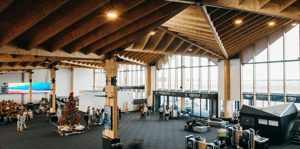
NELSON AIRPORT TERMINAL
Self-centering dampers for a mass timber airport
Dunning Thornton used Tectonus self-centering devices at the bases of the terminal’s tall LVL columns. Their high initial stiffness helped control drift in the flexible timber structure, with displacement-based design verified using nonlinear time-history analysis. The tension-only devices were configured for 350 kN capacity and 20 mm displacement, helping make the 12-metre-high timber roof structure possible without visually heavy columns.
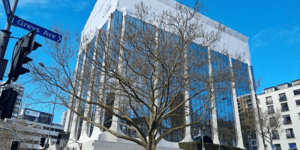
48 GREYS AVE AUCKLAND
Lightweight tension-only bracing; existing building
Adding a new level approximately 40 metres above ground created high seismic accelerations without the project team wanting to add heavy bracing or load to the existing concrete structure. TEKTON combined ReidBrace tension members with 32 Tectonus RSFJs rated at 100 kN. The resulting damping and ductility removed the need for additional members or strengthening of the existing structure.
Seismic Systems for Different Design Objectives
Different projects have different seismic performance objectives. Some prioritise reducing seismic demand and structural weight, while others focus on minimising damage, improving resilience, or simplifying retrofit construction. Tectonus has a range of seismic damping solutions that can be matched to the performance goals of a project.
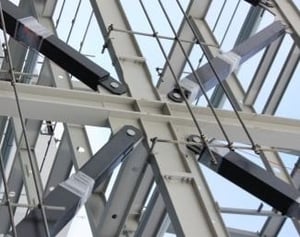
TECTONUS DMAX
BRB/EBF alternative with low overstrength
A friction-damped structural brace that provides high energy dissipation with low overstrength demand.
Often used for:
- Steel braced frame buildings
- BRB / EBF replacement
- Commercial buildings
- Seismic retrofits
Why engineers consider DMAX:
- High hysteretic damping
- Reduced force demand on supporting elements
- Lower overstrength compared with conventional yielding systems
- Familiar design approach for engineers experienced with braced frames
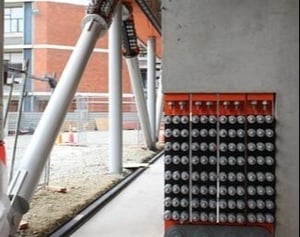
TECTONUS RSFJ
Self-centering seismic braces hold downs
A friction-based connection that combines energy dissipation with self-centring behaviour.
Often used for:
- Critical (post-disaster) infrastructure
- Mass timber structures
- Low-damage seismic design
- Rocking structural systems
Why engineers consider RSFJ:
- Reduces residual drift after earthquakes
- Enables self-centring structural behaviour
- Provides repeatable energy dissipation
- Supports resilient building design without structural yielding
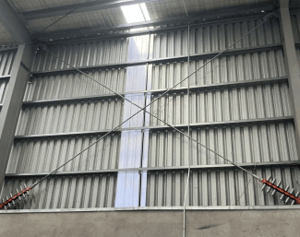
TECTONUS XBRACE
Tension-only braces; 3x ductility
A damped tension-only bracing system designed for efficient seismic strengthening and new construction.
Often used for:
- Industrial buildings
- Warehouses
- Low-rise steel structures
- Retrofit projects
Why engineers consider XBRACE:
- Lightweight and simple to install
- Improves seismic energy dissipation
- Can reduce seismic demand on foundations
- Supports efficient steel bracing layouts
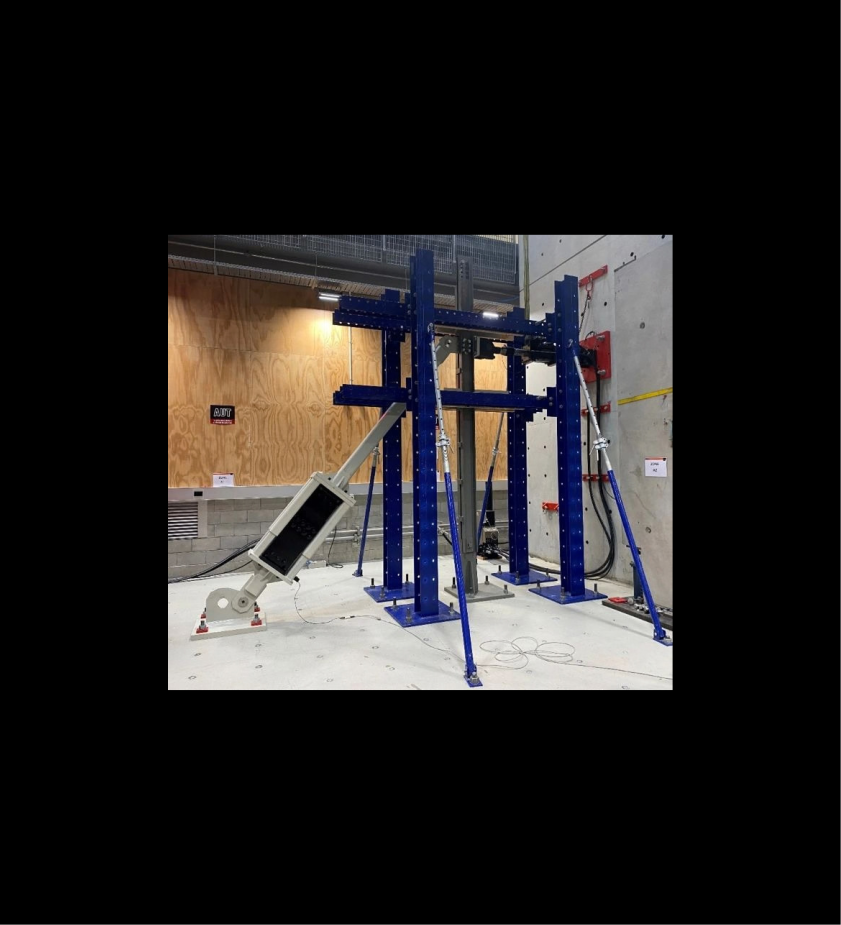
Tectonus maintains strong technical links to the University of Auckland and Auckland University of Technology.
System and component testing has included:
- full-scale DMAX brace testing at the AUT Structures Laboratory
- RSFJ timber, concrete and steel system tests at the University of Auckland and AUT
- full-scale tension-only and tension-compression brace testing
- DFFJ dynamic testing to ASCE 7 and EN 15129 protocols
- durability, scalability and secondary-fuse testing
AUT provides access to dynamic testing facilities, while Tectonus also has internal quasi-static testing capability up to 5,000 kN.
Every production device is performance tested against its specified requirements before shipment.
How can we help?
Ask a technical question, discuss a live project or arrange a technical presentation with the Tectonus engineering team.